COVID Increasing In The Rural Midwest

Alabama.     Why was the state listed as the worst place to work during the pandemic?

Alaska     The state has a higher percentage of children with confirmed cases.

Arizona      The FDA approves a University of Arizona antibody test, which is one of the most accurate in the country.

Arkansas, The University of Arkansas, set aside dorm rooms to isolate and quarantine COVID students.  The campus confirmed six cases on Aug 31.

California     As the number of new infections falls to levels not seen since June, the state announces a new tracking system set to begin in October.

Colorado     Local outbreaks noted among a fire station, restaurants, a bank, and schools.

Connecticut       The Governor extends emergency orders through February 2021 as the number of new infections and hospitalizations increase.

Delaware     The state’s positive rate and hospitalizations are the highest since July.

Florida    The governor promotes less testing.

Georgia     Epidemiologist calls for an end to in-class instruction at the University of Georgia as the campus logs 821 new cases in the second week, up from 189 the week prior.

Hawaii      A human relations firm offers tips to businesses on how to handle COVID-19 as the state sees community spread.

Idaho      August was the deadliest month, nearly doubling from the month prior.

Illinois       The state reports most new COVID related deaths since June.

Indiana     Notre Dame University is increasing testing after suspending in-person classes.

Iowa.      Ames, Iowa, was labeled the worst hot spot in the country and is planning to host a football game on September 12 with 25,000 fans.

Kansas.     COVID-19 spreading among fraternities, sororities in the state.

Kentucky.     Hundreds of new cases at the University of Kentucky has school officials debating about what to do.

Louisiana.     The governor is concerned about rising cases related to hurricane Laura.

Maine.      A local pastor held a wedding on Aug 7, and over 100 infections and one death are related.

Maryland.      The governor announced the state would advance to stage 3 reopening on Friday.

Massachusetts      A Boston University nationwide study shows depression is three times higher than it was one year ago.

Michigan.     Colleges see increasing the spread of the COVID virus.

Minnesota     The State Health Commissioner said Minnesota overlooked the risk of viral transmission in family and friend gatherings compared with supermarkets and stores where mask-wearing and social distancing have become the norm.

Mississippi       Health officials confirm the state’s youngest death from COVID after battling it for several months.

Missouri     A high number of transmissions in the state is the reason the White House Task Force recommended a mask mandate two weeks ago.

Montana      Two college campuses are only testing symptomatic students, and some experts fear it will allow for greater spread among students.

Nebraska     If a child gets COVID at school and dies – is the school liable?

Nevada     New hospitalizations due to COVID are declining in the state.

New Hampshire     A new dashboard tracks cases in schools.

New Jersey     Neighbors who dined together in a private home allegedly caused a local community outbreak.

New Mexico     New cases reported among staff at various schools in the state despite students not yet returning to classes.

New York     Nurses are calling on the state to pass minimum staff requirements anticipating a second surge of cases.

North Carolina     The State Senate passes a 1.1 Billion relief bill, which includes money for families with children.

North Dakota     Leaders in the state do not agree with the CDC’s recent guidelines to decrease testing among the asymptomatic.

Ohio      The governor said a surge in cases is related to students returning to schools and colleges.

Oklahoma     Over 150 school districts are reporting COVID cases.

Oregon     The governor extends the state emergency through November 1st.

Pennsylvania     The governor extends emergency for an additional 90 days.

Puerto Rico     Tourists, needed to boost the economy, are cited for not following masking guidelines.

Rhode Island     The number of new cases continues to decline.

Samoa     The island looks to change the 14-day quarantine to 21 days.

South Carolina     The University of South Carolina reports over 1,000 active COVID infections.

South Dakota     So far, twelve states have reported over 260 cases, and one death traced back to the Sturgis Motorcycle Rally.

Tennessee      School-age children testing positive for COVID is increasing over the last two weeks.

Texas     Texas State reports students who live in the residence halls immediately asked to move out or go home when they test positive.

US Virgin Islands     The territory struggles to reopen and consistently enforce protocols as travelers come to the island.

Utah     Parents want more education options amid the pandemic.

Vermont     A party at a ski lodge traced to an outbreak.

Virginia     Cases increase at state colleges and universities.

Washington     State health officials say the timeline for the COVID-19 vaccine can not be political.

West Virginia     Eight deaths reported on Tuesday as hospitalizations tick up.

Wisconsin     Two rural counties have become hot spots in the state over the past week.

Wyoming     Around 50 college students quarantined after an off-campus party.

If you click on a lick that is broke, incorrect, or not loading, please notify us so we can correct the connection. Thank you.

MyMedicInfo.com is free for basic membership and provides a valuable service advocating for prevention and improved health.

Updated 9/3/2020 at 8:30 am EST.

To get notified of updates, subscribe.

Long term health concerns with COVID-19 infection.

covid can also cause....

Death from COVID is not the only concern for those who get the infection.  Long-lasting effects from the virus can affect the body. Damage to the lungs for those who recover from severe COVID lung infection may lead to an increased predisposition to future lung infections.  Confusion and fatigue are symptoms people may continue to experience after recovering from the acute effects of the virus.  While many who contract COVID do improve, the long term effects of this virus are still unknown.  As a clinician and as a patient, I continue to advocate for you and recommend preventing COVID exposure.

Lungs

A  virus caused me symptoms for months and may have contributed to other conditions that still bother me.   Within two years of starting my career as a PA, a colleague diagnosed me with infectious mononucleosis.  I had elevated liver enzymes, fevers, sore throat, night sweats, dehydration, and body aches.  When I saw my PA, she and her supervising doctor tested me for streptococcal throat infection, hepatitis A, B, C, tuberculosis, and HIV.  I tested negative for those infections.  A blood smear showed atypical lymphocytes.  An EBV titer blood test suggested it was the cause of my illness.  Epstein Barr is a virus that causes mild symptoms in most people.  However, some people develop more severe symptoms.  In my illness, the acute symptoms lasted three weeks.  I went on to battle postexertional exhaustion; I describe it as feeling like a rag doll.  Instead of feeling energized after a simple 15-minute walk in the park, I would experience overwhelming tiredness that lasted for days.  I knew I had to regain my strength, and it was frustrating when exercise made me feel worse.  I had no choice but to cope with chronic fatigue, which lasted more than six months.  I remember, at the time, my employer allowed me to return to work part-time for several months.  I was grateful I worked in a clinic and for a health care organization.  Had I worked for a less sympathetic employer, I could have lost my job.  It was physically not possible for me to return to full-time employment.  Chronic Fatigue Syndrome is a real condition.  My symptoms were debilitating.  To this day, some health care providers fail to recognize chronic fatigue syndrome and often tell patients that their symptoms are all in their heads.  The unbelieving clinicians cite a lack of blood tests and other organic tests as reasons to support their disbelief.  Yet, those same clinicians believe in the diagnosis of migraines even though there is a lack of blood tests and other tests to confirm migraines.  Both conditions have criteria for meeting the diagnosis and are found in populations around the globe.  Clinicians have had to be encouraged by their colleagues to believe in CFS.  Estimates suggest there are 2.5 million Americans who suffer from CFS.  People who have persistent chronic fatigue seek treatment from more than one health care provider before being diagnosed.  A  2008 survey found up to 44% of people with the diagnosis reported having to visit five or more clinicians before the determination made.  Patients also add they had to seek a different health care provider to find someone who believes them and, thus, treats their symptoms. Even if a person sees a clinician who recognizes CFS, the treatment recommendations may not be up to date.  To make matters more troubling, people with CFS battle symptoms for years before they get treatmentAnother problem with making this diagnosis is the fact that several comorbid conditions share traits with the disease.    Conditions such as fibromyalgia, IBS, and hypothyroidism have overlapping symptoms, making it difficult for even experienced clinicians to make a diagnosis.  Research for CFS continues as this condition is expensive due to costs of care and loss of productivity.

It is essential to remember some viral infections are associated with long term risks.   After an EBV diagnosis, a person has an increased risk of developing lymphoma.  Varicella virus infections can return later in life, causing shingles that may present with a variety of symptoms and possibly severe consequences.

The number of new COVID infections reached all-time highs last week in the states of Arizona, Florida, North Carolina, Oregon, and South Carolina.  As the country reopens, the virus spreads, and new infections abound.  Sign up for member-only benefits, including:

Prepare for your next medical visit.

Improve communication between you and your health care providers.

Comprehensive guidelines for at-risk individuals to prevent infection.

Have questions about the service or membership?   Contact me, and I will answer your questions about membership.

Stay informed and stay well.

Updated on 6/6/2020 at 2:07 pm EST

National and international copyrights protect this article and MyMedicInfo.com.  Using a web link to reference the post is acceptable.  Acknowledgment of the author appreciated.

Why I Created MyMedicInfo

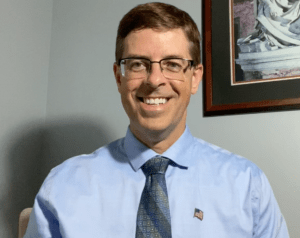
I’ve been a physician assistant for 25 years.  I have worked in family medicine, internal medicine, addiction medicine, and orthopedic surgery.  I have seen patients struggle with remembering the specific names or doses of their medication.  I know the questions your health care providers ask when you see them in the clinic, urgent care, emergency room, hospital, and ambulances.  I’ve seen patients in agony trying to answer my questions when they had migraines, chest pain, abdominal pain, or shortness of breath.

When the encouragement from changing from paper charts to electronic medical records developed, it was sold to us as ways to improve patient care.  There would be fewer medical errors, better communication, and improved outcomes for patients.  Over the years, the government enforced electronic medical records by reducing medicare reimbursements year after year on those hospitals and clinicians who did not use electronic medical records.

Your medical information is encrypted and protected on those web servers.  However, all of your medical treatments and information are probably on different systems.  If you have a primary care physician, a cardiologist, and an endocrinologist, the odds that they are all on the same electronic medical system is low.  To get access to all of that data is cumbersome and often complicated.  MyMedicInfo simplifies access to your medical history by using Trusona for user authentication and no password to remember.   Plus, you control your medical information—highly sensitive and confidential information you can omit.  For example, if you have a history of a sexually transmitted infection, simply skip that information.  An emergency room physician or paramedic is more interested in your allergies, medications, and what diagnosed conditions you have.  MyMedicInfo will enhance your medical care.

As a health care provider who has worked in a variety of clinics and environments, I can get frustrated with the technology intended to make things better.  I’ve worked at a hospital where the health care providers had to take classes to use the hospital’s electronic medical records.  Health care electronic systems should not be so complicated that you have to take classes to navigate through them.

I developed this website to keep your information secure.  It has three levels of security.  First, it has the highest level of SSL encryption available.  A firewall is frequently scanning and preventing unauthorized access: Additionally, it uses a password-free two-factor authentication login to verify your identity.  The service does not allow a user to upload files to protect the website.  I know that with any medical care, you need to trust the people involved to protect your information and promote your health. 

You probably have received medical treatment from a physician assistant.  You know they are highly skilled, knowledgable practitioners.  I am proud of my career and my chosen profession.  Physician Assistants are sometimes called patient advocates.  We have a reputation for explaining complex medical terms in a way that is easier to understand.  We have a reputation of spending more time with patients, especially when doctors are pressured for their time.  Physician Assistants tend to be thorough in their evaluations and have a high rate of patient satisfaction.

I’ve included a link to a video clip of one of my recent discussions on the COVID pandemic. Watch it if you want to learn more about me.  I want to earn your business.  I wish you wellness and continued excellence in medical care as you interact with professionals in the future.

Pandemic Fatigue

stress

In the United States, many of the recent news reports are focusing on trying to find a new normal.  Merely using the word normal implies that things can go back to the way it used to be before COVID-19.  Unfortunately, we know that is not going to happen.   

One definition of fatigue is a person lacks the energy to perform tasks.  It is also known as exhaustion, feeling run down, lethargy, listless, malaise, or weakness.   Fatigue may be due to mental stress.  It may be due to physical demands.  Sometimes it is a combination of both psychological and physical.  Pandemic fatigue is feeling these symptoms as a result of adjusting our daily routine due to the COVID-19 pandemic.  We in the United States are suffering lives lost, unemployment, business disruption, and financial burden.  How the pandemic affects individual Americans varies considerably –  the contrasts can be as different as night and day.

Lives lost due to COVID 19 – over 90,000 Americans.  Australia – lives lost 98.  Iowa State has more COVID related deaths than the country of Australia.   Lucas county of Ohio has more COVID related deaths than the country of Greece.  The city of Chicago has more COVID associated deaths than the country of Poland.  In the United States, we have a stark difference between places that have lost a significant number of lives vs places that have significantly less.  Albany in Georgia, Baton Rouge, Bridgeport in Connecticut, Boston, Buffalo, Cedar Rapids in Iowa, Chicago, Detroit, Farmington in New Mexico, Flagstaff in Arizona, Greely in Colorado, Greensburg in Indiana, New York City, New Orleans, Philadelphia, Salem in Ohio, Sumter in South Carolina, Trenton in New Jersey, and Washington DC are among the hardest-hit cities with higher total death rates per capita.  Some metropolitan areas with low infection rates per capita include Portland, Sacramento, San Antonio, and Tampa Bay.   Another contrast is the percentage of African Americans who died in comparison to other races.  Theories as to why the African American population has suffered more include higher rates of pre-existing conditions, less access to health care, housing disparities, and a higher percentage of essential workers cited as probable causes.  Globally, the United States has one of the higher death rates per capita.  Countries with higher infection rates per capita should logically have higher numbers of COVID related deaths.   However, Singapore has a high number of infections per capita but is not among the top 15 countries in COVID related deaths.  It could be explained by how they define COVID related deaths.   Other undetermined factors could be reasons why they are not seeing as many deaths per capita.

Staggering unemployment is the new normal.   According to the Bureau of Labor Statistics, the unemployment rate for April 2020 spiked to 14.7% as 20.5 million workers lost their jobs.  Those facts do not include May unemployment figures.

Unemployment Rates for the World’s Largest Economies 

The unemployment rates for the world’s largest economies were generally low at the end of 2019.

  • Japan: 2.4%
  • India: 3.5%
  • Germany: 3.6%
  • United Kingdom: 3.9%
  • United States: 4.1%
  • China: 4.8%
  • Canada: 5.9%
  • France: 8.6%
  • Italy: 10.4%
  • Brazil: 11.6%4 

Source: https://www.investopedia.com/articles/personal-finance/062315/unemployment-rates-country.asp

In contrast the unemployment of the same countries in April 2020:

  • Japan: 3.0%
  • India: no data
  • Germany: 3.9%
  • United Kingdom: 4.8%
  • United States: 14.7%
  • China: 4.3%
  • Canada: 7.5%
  • France: 10.4%
  • Italy: 12.7%
  • Brazil: 14.7% 

Source: https://www.imf.org/external/datamapper/LUR@WEO/OEMDC/ADVEC/WEOWORLD/JPN

The United States Unemployment rate is now equal to Brazil.  Other countries who have faced COVID lockdowns such as Germany and the UK have not had as much of a change as the US.  China is the only country to decrease the unemployment rate.  People who still have employment are either essential workers or jobs that accommodated them to work from home.  1 in 5 Americans who had employment, lost it due to coronavirus. Some positions terminated while some companies forced to put their employees on hold, and when the weeks turned into a month, the anger was palpable.  People protested, wanting to return to their jobs or owners fighting for the survival of their business.   We as Americans have invested years of blood, sweat, and tears into our livelihoods, and we realized that we had to return to work.   The problem remains, how to make that happen without allowing the virus to spread out of control.

Finances – While the United States has been the most exceptional economy for more than a decade, we could lose that status. Increased national debt and the loss of employment will have an impact on the GDP.  The actual financial burden with the pandemic and its effect on the US has only begun.  At the beginning of the year, our economy was strong.  Business experts are talking about a recession that could rival the great depression.  One billionaire believes the United States will suffer an economic depression if the lockdowns last for a year.  The United States was already trying to balance saving lives and saving the economy back at the end of March.

Meanwhile, two professors at Northwestern University predicted the costs of not closing down non-essential businesses and allowing the virus to spread unchecked would have been more expensive than closing non-essential businesses. They were not alone in their predictions.  In the US and abroad, experts weighed in on what the best course of action would be. Investors are now predicting a 3.9% fall in U.S. GDP in 2020.

All this stress creates mental fatigue from the pandemic.  The kind that disrupts sleep and changes your appetite.  Psychological stress affects your ability to concentrate and contributes to other symptoms like headaches, muscle aches, and abdominal pains.  It is new stress, and our country unprepared.  Our food banks are in high demand, the unemployment offices that process payments unable to keep up, and the federal government was providing a stimulus intended to offset the financial strains are giving away money to corporations and institutions that do not need it.  While some large chain restaurants and sports franchises have already said they will return the money, one educational institution has already declared they will keep the money and use it for students.  If you don’t acknowledge the mental strain, you are in denial.  Denial itself is a psychological mechanism to try and protect oneself from facts.  When facts are too painful to admit, denial is a coping mechanism to allow you to continue to function, to move on.

Front line health care professionals are working extra hours – the physical demands of caring for more patients in hot zones day after day contributes to fatigue.  The post-traumatic disorder is already presenting in some of them from witnessing more deaths than usual.  It also gives a risk of suicide as we learned of one emergency room physician who got COVID, recovered, returned to work, and ultimately took her own life.  Nonessential workers are also affected.   They are at home, getting restless and weary as they watch the news, interact on social media, and worry about the safety of their loved ones.   In some hot zones, they are returning to work.  They now have to worry about how they can do their job safely and must plan a new work environment to reduce the chances of spreading infection.

What follows are some of the lives lost or changed due to COVID-19.  The loss of these heroes affects their loved ones, their neighbors, the communities they served, and our world:

Police officers – https://www.lawenforcementtoday.com/senior-detention-officer-officer-of-23-years-man-of-faith-dead/

Paramedics – https://www.ems1.com/coronavirus-covid-19/articles/covid-19-ems-deaths-jk5zWFziwYVYUaM4/

Store workers – https://www.eater.com/2020/4/7/21212135/grocery-workers-are-dying-from-coronavirus-trader-joes-walmart

https://www.kcra.com/article/he-was-a-healthy-man-family-mourns-safeway-worker-who-died-of-covid-19/32179508#

Meatpackers – https://www.usnews.com/news/healthiest-communities/articles/2020-05-01/cdc-nearly-5-000-meat-plant-workers-infected-by-coronavirus

Doctors – https://www.nbcnewyork.com/news/local/new-jersey-er-doctor-dies-one-week-after-exhibiting-covid-19-symptoms/2354084/

Nurses – https://www.usatoday.com/story/news/nation/2020/04/21/us-nurses-who-died-coronavirus-honored-white-house-protest/2996839001/

Physician Assistants – https://www.military.com/daily-news/2020/03/31/guardsman-who-died-covid-19-remembered-1st-responder-passion-serve.html

Nurse Practitioners – fortunately, no deaths reported https://www.11alive.com/article/news/health/coronavirus/georgia-nurse-survives-covid19-battle/85-37c7b703-fe2f-41d3-b62f-f4a6ee2a838d

Nurse Anesthetists – thankfully, no deaths reported – https://www.nola.com/news/coronavirus/article_25b835c0-7b65-11ea-ab5c-67ceca2dba77.html

Respiratory Therapists – https://www.local10.com/news/local/2020/04/24/partner-of-fallen-healthcare-worker-says-they-need-more-protection-from-coronavirus/

https://www.poynter.org/business-work/2020/the-journalists-and-colleagues-weve-lost-to-the-coronavirus/

Politicians – https://www.forbes.com/sites/jackbrewster/2020/04/07/these-34-us-lawmakers-have-tested-positive-for-covid-19/#378ee12d46d9

https://www.newscenter1.tv/south-dakota-state-representative-bob-glanzer-dies-at-74/

TSA employees – https://www.khou.com/article/news/health/coronavirus/fifth-tsa-employee-dies-of-coronavirus-as-more-than-500-have-tested-positive/285-8910f312-fd8e-418a-acc6-6ca303474a05

Overall Medical workers:  https://www.businessinsider.com/healthcare-workers-who-died-with-the-coronavirus-2020-4?op=1#douglas-linn-hickok-57-a-physician-assistant-and-new-jersey-national-guardsman-became-the-first-us-military-service-member-to-die-from-the-coronavirus-7

Overall memorials: https://www.cnn.com/interactive/2020/health/coronavirus-victims-memories/

When does the pandemic improve?  It could dramatically improve with successful treatments.   Finding effective antiviral medicines would allow for less severe outcomes.  A successful vaccine would prevent illness.   Herd immunity.  Even the possibility of finding a post-exposure prophylactic medication that is mostly safe and lessen the severity of disease would dramatically change things.  Until then, defense remains our best strategy.  Good luck in avoiding exposure to coronavirus in America.  Recent data shows you have had it with the shelter in place recommendations.  The latest guidelines implemented by the CDC to safely return us to work suppressed by the White House task force.  Some Americans are unwilling to wear masks when out in public but eager to protest and visibly display assault weapons to make their voices heard.  The concept of comprehensive testing before Americans returned to work seems to have lost traction.   America is suffering, and it will continue to do so in the unforeseen future as we will are unwilling to help stop the spread.  What we do here in the US has implications for others all around the globe. Our actions as a country will not only affect our economy but will have a ripple effect on other countries that rely upon the US for their country to function.  Many innovators and scientists are finding solutions to these complex problems.  Keep them in your prayers, for they are the ones who will save lives and decrease the suffering.  Our government had the opportunity to prevent the devastation of this pandemic, but that window of opportunity closed a long time ago.  At this time, our politicians can only react as prevention was not enough of a priority.

Register now for future member-only updates, including access to links on COVID-19 treatments.

Published 5/17/2020 at 8:30 am EST